
Now Reading: Matcha vs Green Tea: Caffeine, Taste and Benefits Compared
-
01
Matcha vs Green Tea: Caffeine, Taste and Benefits Compared
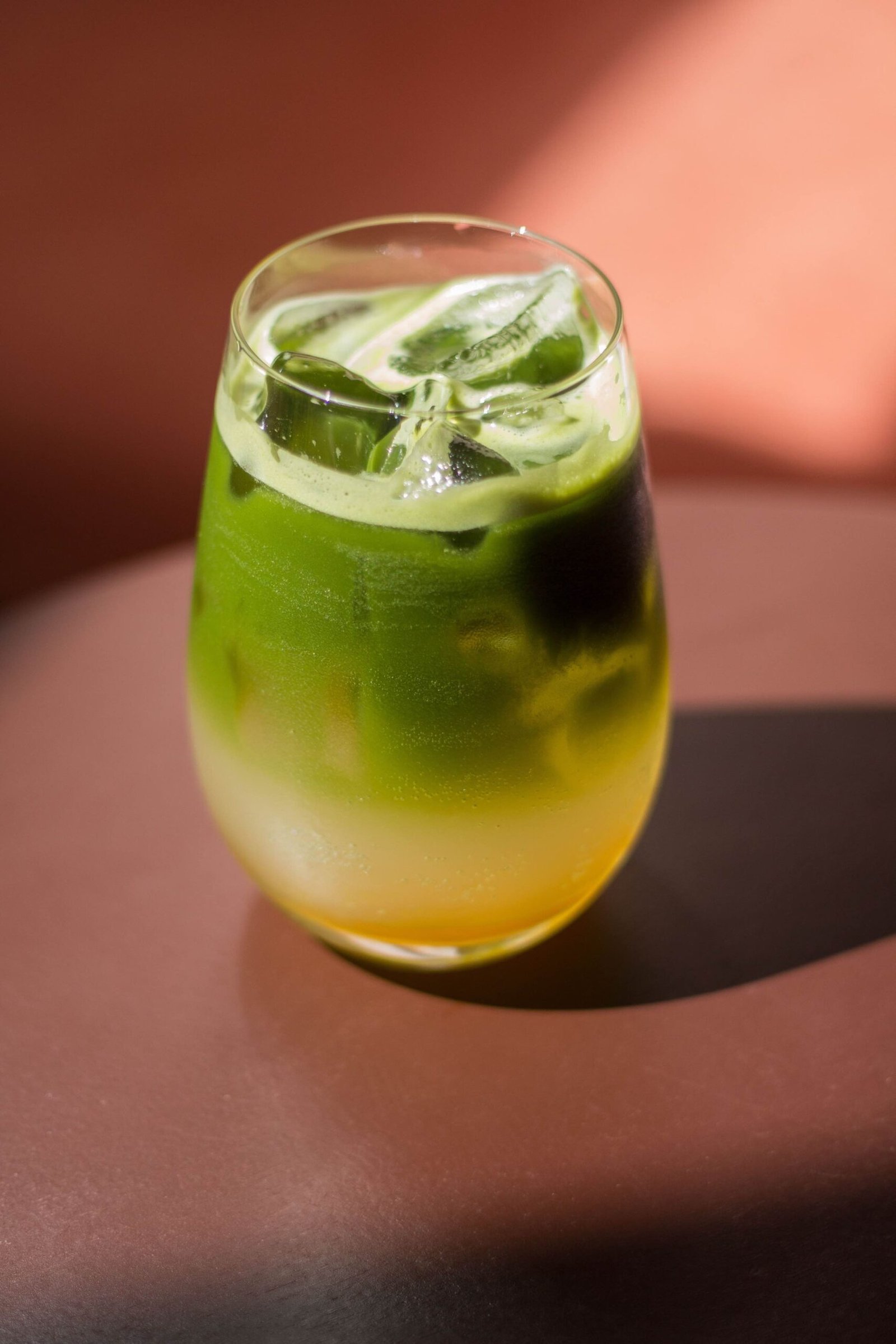
Matcha is a type of green tea where you whisk the powder into water, while regular green tea is made by steeping the leaves and then removing them. Matcha usually has more caffeine per serving and feels richer, while brewed green tea is lighter and easier to make.
This difference matters when you’re choosing between a small tin of powder and a big box of tea bags at the store. The package size doesn’t tell you much until you know how much tea goes into each cup.
Here’s how to compare matcha and green tea in terms of caffeine, taste, price, and what the research says about their health benefits.
Matcha vs green tea at a glance
In this guide, ‘green tea’ refers to brewed leaf tea or tea bags, not matcha. Serving sizes are included because just saying ‘a cup’ could be confusing.
| Feature | Matcha | Brewed green tea |
| What you drink | Finely powdered tea leaf suspended in water | Water infused with leaves that are then removed |
| Caffeine reference | About 38–89 mg for 2 g of powder, calculated from a published range of 18.9–44.4 mg/g | 37 mg per 12 fl oz (about 355 mL) in the FDA’s typical-drink table; individual brews vary |
| L-theanine | Present; amount depends on the product, with no reliable universal mg-per-serving figure | Present; amount depends on the leaves and extraction, with no reliable universal mg-per-cup figure |
| Taste | Often grassy, savory, and concentrated, with a fuller texture | Often lighter; grassy, vegetal, nutty, or toasted depending on the tea |
| Preparation | Measure, sift, add water, and whisk | Add water, steep, and remove the leaves or bag |
| Illustrative ingredient cost | $1 per serving if a 30 g tin costs $15 and you use 2 g | $0.20 per serving if 20 bags cost $4 and you use one |
| Useful starting point | Someone who enjoys a concentrated drink or a tea base for a latte | Someone who wants an easy everyday mug |
The caffeine amounts come from the FDA and a peer-reviewed study on matcha. These are reference values from the studies, not direct lab comparisons of equal-sized cups. The prices are just examples and don’t include milk, sweeteners, equipment, tax, or delivery.
Is matcha actually any different from green tea?
Both teas come from the Camellia sinensis plant. For matcha, the leaves are grown in the shade to make tencha, which is then ground into a fine powder. When you brew regular green tea, the compounds move from the leaves into the water. With matcha, you drink both the powder and the liquid.
The Kochman et al review examines how growing and preparing the leaves changes their makeup, and points out that there’s a lot of variation between samples. Eating the leaf in matcha doesn’t mean every serving is nutritionally the same, or that it’s always healthier.
Brewed green teas also vary. For example, Japanese sencha, which is steamed, can be quite different from Chinese green tea, which is pan-fired. If you’re interested in processing differences, our oolong vs green tea comparison covers another type from the same plant family.
Does matcha have more caffeine than green tea?
Often yes, but again the amount of powder or leaves is more important than the size of the mug.
A review found that matcha contains between 18.9 and 44.4 milligrams of caffeine per gram of powder. Using that range, you can estimate the caffeine in your serving:
| Matcha powder used | Calculated caffeine estimate |
| 1 g | About 19–44 mg |
| 2 g | About 38–89 mg |
| 3 g | About 57–133 mg |
These are calculations derived from the samples we’ve analysed, not guaranteed limits for every brand. A product specific caffeine claim is of course preferable if available.
For brewed green tea the FDA lists 37mg in a typical 12 fl oz. That’s a reference value, not a rule for every bag or every brewing method. You can easily get more than that with more leaves, a longer steep etc.
Adding water to an already prepared matcha makes it less concentrated (without removing the caffeine). A large latte made with 2g of powder will still contain the caffeine from those 2g, just taste rather less intense after the milk has been added.
For instance if you’re moving from a mug of green tea to a two scoop café matcha you can’t just assume the caffeine content is the same. You need to find out how much powder the café uses and whether they have the caffeine content for that particular recipe.
Does L-theanine make matcha calming?
Both teas contain L-theanine (an amino acid). The amount of L-theanine in matcha will vary depending on the growing conditions but neither a bright green colour nor a ‘ceremonial’ label will tell you the exact amount present in your tea.
An analysis of 34 commercial teas looking at both caffeine and theanine found that the extraction conditions have an effect on the amounts measured. That’s why a single ‘L-theanine number’ would be a very poor guide to an untested product.
There’s absolutely no guarantee that the presence of L-theanine in a cup of tea will in fact alleviate anxiety or prevent the jitters caused by caffeine. “Calm energy” is a claim that should be treated with scepticism, particularly in the absence of a full disclosure of the product’s ingredients. If caffeine is making you feel uncomfortable then going to matcha is unlikely to be the answer.
Which tastes better?
Matcha often has that umami character along with the grassiness and some bitterness. The fact that the powder stays in the drink gives it a fuller mouthfeel than a strained tea. If the powder isn’t well dispersed you can quite clearly see the clumps.
Brewed green tea generally tends to be lighter. The range is quite wide actually with one tea being quite grassy and zesty, another quite nutty or even slightly roasted. You could quite easily dislike one and prefer another.
Try the tea plain first before you go about judging a sweetened latte against an unsweetened tea. The milk and the syrup make such a difference to the flavour that you may well be comparing two entirely different recipes.
If your brewed green tea tastes harsh then check the water temperature and steeping time on the packet before binning the box. If your matcha is gritty then sift it and whisk it properly. Adding more powder to make up for a weak brew will also increase the amount of caffeine.
Is matcha any healthier than green tea?
There isn’t enough evidence to declare matcha the healthier option for everybody. The chemical make up can tell you what’s in the drink, it can’t by itself tell you how drinking it will impact your long term health.
Antioxidant content does not establish a health ranking
Both contain the catechins (including EGCG). Lab measurements of antioxidant activity don’t establish that one serving is better at preventing disease than another. The product, the preparation and the serving size all play a part in the comparison.
The NCCIH states that firm conclusions are still not available for most of the touted uses of green tea. The cancer research has been inconclusive. That doesn’t in any way justify the promotion of green tea as a cancer preventative.
Cholesterol findings need context
NCCIH reports small reductions in total and LDL cholesterol in the trials of green tea products, though most of those studies looked at extracts rather than the normal beverage. Those findings don’t establish that your morning matcha is going to beat brewed tea or that it will replace your prescribed treatment.
Neither is a dependable weight-loss strategy
NCCIH describes possible modest effects on body weight (results will vary by product and individual circumstances). Spending more on matcha is not a guaranteed route to weight loss.
For actual day to day shopping it’s far more useful to compare the drink you’re actually going to make. The caffeine, the added stuff, the cost and whether you actually like it enough to finish the packet.
What’s the cost per serve?
Use the amount of tea in the package rather than its apparent size:
Cost per serving = package price / number of servings.
For matcha it’s simply package weight in grams divided by the number of grams you use per serving. A hypothetical $15 tin of 30g would give you 15 servings at 2g each (i.e. $1 per serving). At 1g it would give you 30 smaller servings at $0.50 each.
A hypothetical $4 box with 20 tea bags would be $0.20 per one bag brew. Two bags would be $0.40. With loose leaves you’d use the same weight calculation as you would for matcha and then add on separately for any extra infusions you actually drink.
This way you can compare the packages in front of you without having to rely on a price bracket that may not be applicable to your local shop. If you’re at all unsure about the taste then just buy a small quantity first.
How do you make matcha and green tea?
Matcha: measure your powder before whisking
Ippodo’s classic matcha recipe is 2g of sifted powder, 60ml of water at 80°C/176°F and about 15 seconds of vigorous whisking. It’s a very small amount of matcha, a very concentrated serving rather than a full mug.
Sift the powder into a bowl, add the measured water and whisk in with a quick M motion. You can always add a bit more water afterwards to suit your taste. It’s useful to weigh the powder as teaspoons are not a very accurate way of measuring serving sizes.
Brewed green tea: follow the particular tea’s instructions
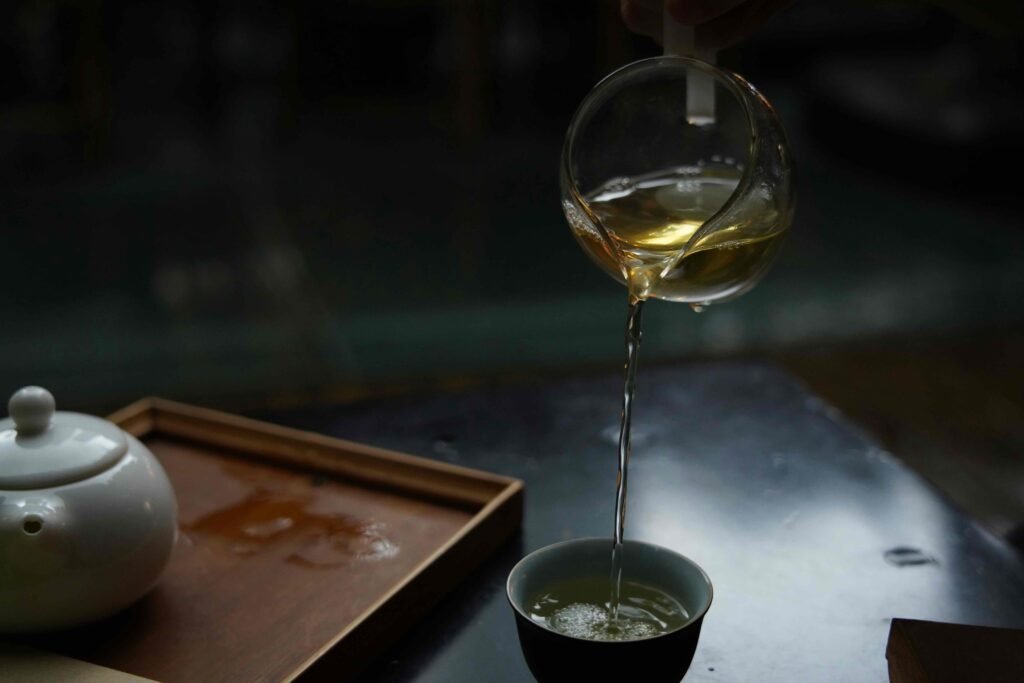
There is no one recipe for every green tea. A tea bag for a large mug will have very different proportions to a tea bag for a concentrated Japanese teapot.
For example Ippodo’s sencha is 10g of leaf in 210ml of water at 80°C/176°F for 60 seconds, then filtered. This is a very concentrated preparation and its caffeine content should not be assumed to be the same as the FDA’s typical drink reference.
For the tea you’re buying, start with the instructions that come with it. Note the amount, the temperature and the time so you can then vary one of those on the next brew.
Who should be careful with either tea?
Both contain caffeine. If you’re having trouble sleeping, you’re feeling shaky or you’ve got a racing heart then it’s time to look at how much you’re consuming and get advice if necessary. Don’t just look at coffee, look at energy drinks and all other sources of caffeine as well.
The FDA cite 400mg per day for most adults as an amount which is generally not associated with any adverse effects, with the caveat that sensitivity will vary. It’s not a target. If you’re pregnant, breastfeeding, on medication or managing a condition which caffeine could affect, you should ask your health professional about your individual circumstances.
Keep brewed beverages separate from concentrated green tea extracts. NCCIH reports that the rare cases of liver injury are mostly with the extract tablets or capsules and there can be drug interactions. A GP or pharmacist would be able to advise you on a particular product and medication combination.
This is general information only and not medical advice. If you’re suffering with persistent symptoms then you should be having them assessed rather than just carrying out a series of experiments with different teas.
Which should you choose?
Choose brewed green tea if you’re after a simple mug, a lighter body and the option of using bags or loose leaves. Choose matcha if you like its savoury taste and are prepared to measure it out and whisk it.
If caffeine is the deciding factor then go by the actual preparation rather than by colour, cup size or marketing gimmicks. Start with a small pack, make it as per the instructions and let the drink win its place in your life.
Sources
- Kochman J, Jakubczyk K, Antoniewicz J, Mruk H, Janda K. Health Benefits and Chemical Composition of Matcha Green Tea: A Review. Molecules. 2021;26(1):85. Composition and published caffeine range; serving estimates calculated from mg/g.
- US Food and Drug Administration. Spilling the Beans: How Much Caffeine Is Too Much?. Typical green tea caffeine reference and individual sensitivity guidance.
- Boros K, Jedlinszki N, Csupor D. Theanine and Caffeine Content of Infusions Prepared from Commercial Tea Samples. Pharmacognosy Magazine. 2016;12(45):75–79. Analytical study of commercial teas and extraction conditions.
- National Center for Complementary and Integrative Health. Green Tea. Evidence limitations, extract safety, and interactions.
- Ippodo Tea. Usucha (Classic Matcha) and Standard Sencha Brew. Preparation examples.