
Now Reading: Matcha vs Coffee: Which Is Better for Energy and Focus?
-
01
Matcha vs Coffee: Which Is Better for Energy and Focus?
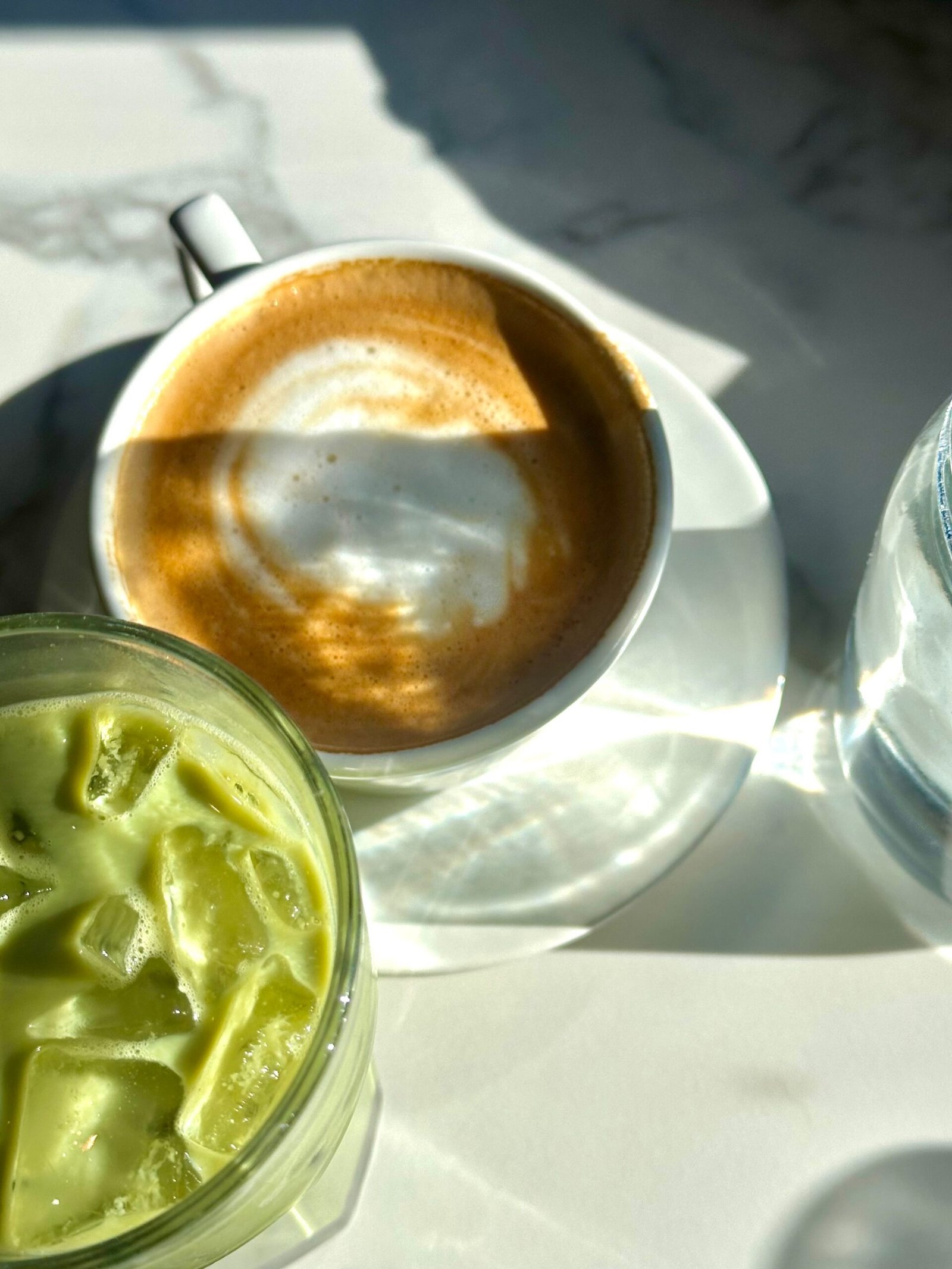
Your morning coffee helps you get through the first meeting, but maybe you’re thinking matcha could be a gentler option. Before you make the switch, take a look at what’s actually in each drink. A little matcha and a big cup of coffee can have very different caffeine levels.
There’s no clear winner between matcha and coffee when it comes to energy and focus for everyone. Matcha gives you a lower dose of caffeine, depending on the powder and how much you use. Coffee might suit you if you enjoy the taste and can handle your usual amount. There isn’t any research showing that matcha or its ingredients will help you concentrate better than coffee.
It’s more helpful to compare things like serving size, timing, cost, taste, and how you sleep afterward. The seven-day plan below lets you track all of this, but remember, your personal trial isn’t scientific proof.
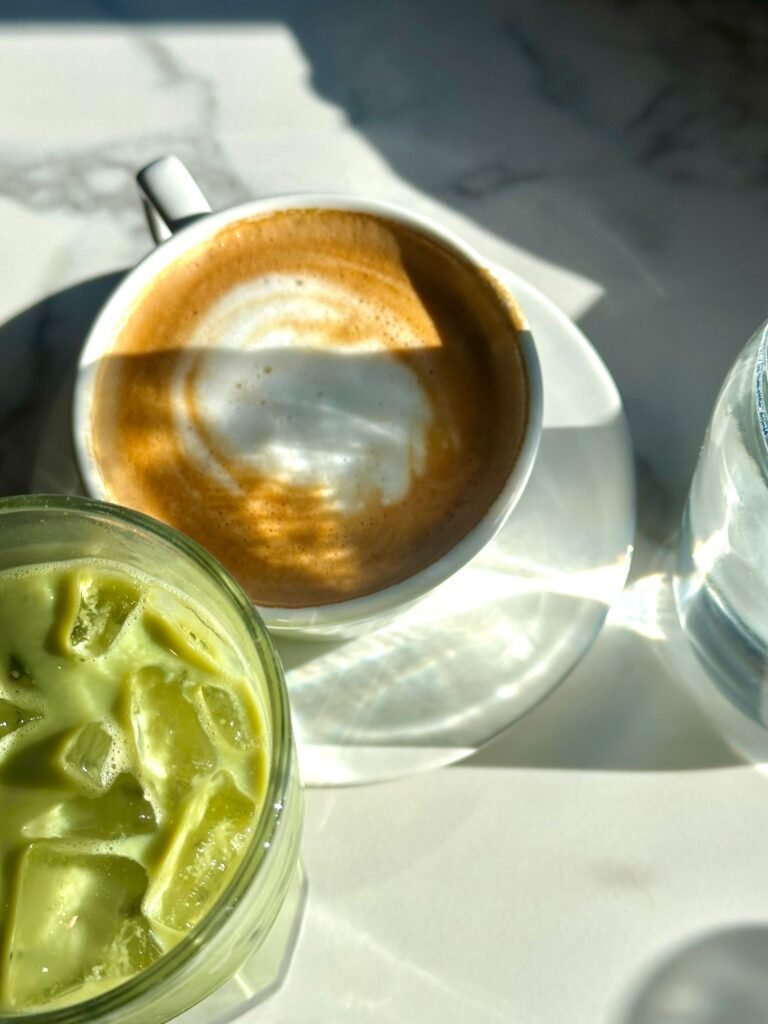
Matcha vs coffee at a glance
The caffeine numbers below come from different reference sources, not from lab tests of equal-sized drinks. The price examples are just estimates, not real shop prices.
| Feature | Matcha | Brewed coffee |
| What you prepare | Powdered green tea whisked into water | Ground coffee brewed in water, with the grounds removed |
| Caffeine reference | 13–68 mg for preparations using 1–2 g powder, reported in a Bavarian food-surveillance investigation | 113–247 mg per 12 fl oz, about 355 mL, in the FDA’s typical-drink table |
| What changes the caffeine serving | Product and grams of powder | Beans, brewing method, recipe, and serving volume |
| Focus-related evidence | Small trials suggest effects on some attention tasks; superiority over coffee is not established | Caffeine can increase alertness; the amount and your response matter |
| Taste and texture | Grassy or savory, sometimes bitter, with suspended powder | Roasted flavors that vary with beans and brewing; filtered coffee has no suspended tea powder |
| Illustrative ingredient cost | $0.50–$1.00 if a 30 g tin costs $15 and you use 1–2 g | About $0.64 if a 340 g bag costs $12 and you use 18 g |
| Preparation considerations | Measure the powder and whisk or mix it thoroughly | Measure grounds and use your chosen brewer |
The caffeine sources are the Bavarian State Office for Health and Food Safety’s investigation and the FDA caffeine guide. The matcha range covers different products and powder amounts, so it’s not guaranteed for every brand. The coffee number doesn’t include every espresso, instant coffee, cold brew, or café latte.
The ingredient cost doesn’t include milk, sweeteners, filters, equipment, electricity, delivery, or tax. The coffee cost example uses 18g of ground coffee, but its caffeine content hasn’t been measured. So, it wouldn’t be accurate to compare that directly with the FDA range since it’s not a tested recipe.
Does matcha have less caffeine than coffee?
Yes, matcha can have less caffeine than coffee, as shown in the examples above. The answer changes if you change the recipe. A heaping spoonful of powder is not the same as a measured gram, and a small coffee is different from a large takeaway cup.
For matcha, try to record the grams instead of using a rough teaspoon. For coffee, note the final volume and how you made it. If you can find product-specific caffeine info, use it. Otherwise, just estimate instead of trying to get an exact number.
Adding more water or milk to your drink doesn’t remove the caffeine. A bigger latte might taste milder, but it still has the same amount of powder or coffee.
If you’re thinking about leaf tea too, our matcha versus green tea comparison explains how drinking powdered leaves is different from steeping and removing them. The caffeine info comes from different published samples, so it’s another reason to check the product you actually use.
Which is better for focus?
Caffeine is part of the explanation for both drinks. The EFSA caffeine assessment describes increased alertness and reduced sleepiness with moderate intake. Feeling more awake is not the same as being more accurate at doing all the tasks.
What matcha research shows
In a 2017 randomized, placebo-controlled study,23 people tried matcha drinks and bars (with 4g of powder) and placebo versions. There were some improvements in certain attention and response speed tasks, little effect on other cognitive tasks, and no big effect on mood.
That short-term study didn’t compare matcha to coffee. It also used much more powder than the 1-2g amounts mentioned earlier. So, it doesn’t show that your usual smaller matcha serving will be better than your morning coffee.
Does L-theanine make the difference?
L-theanine is an amino acid in tea. A 2008 randomized crossover study tested 250 mg of L-theanine and 150 mg of caffeine, both alone and together. The combination did better than placebo on several task measures and some subjective ratings.
Those were controlled ingredient doses, not a direct comparison of plain matcha and coffee. The study doesn’t show that a random scoop gives you the same mix, or that L-theanine will cancel out caffeine’s unwanted effects. “Contains L-theanine” doesn’t guarantee calm concentration.
Is matcha less likely to give you the jitters or the crash?
If you switch and end up having less caffeine, you might notice a difference. But that doesn’t mean the drink itself caused the change. Things like portion size, time of day, other caffeine, meals, sleep, and your daily routine can all affect your experience and make it hard to compare.
The evidence above doesn’t guarantee that matcha won’t give you jitters or a crash. Don’t keep adding more powder to try to get a certain effect. If your usual coffee works for you, there’s no reason to switch to matcha based on these studies.
Neither drink makes late caffeine harmless. The EFSA says even 100mg of caffeine can affect sleep in some adults if taken near bedtime. You don’t need to reach that amount to take your sleep seriously.
If you want an evening drink, our chamomile caffeine guide shows how to tell pure chamomile from blends with caffeine.
Which costs less per cup?
Use your package price and actual serving weight:
Cost per serving = package price ÷ package weight × grams used.
For instance a hypothetical $15 tin with 30g of matcha comes in at $0.50 per gram. A 1g portion is $0.50, a 2g portion is $1.00. A hypothetical $12 coffee bag with 340g is at about $0.64 per 18g portion.
That calculation can go either way, depending on the drinks, prices, or recipes. Count extras separately, especially if one drink is plain and the other has milk or syrup. If you’re buying from a café, compare takeaway prices with other takeaway prices, not with the cost of making it at home.
A seven-day personal switch test
This is a worksheet you can try, not a report of someone’s finished experiment. It’s meant for adults who already drink caffeine and want to try something different. You don’t have to start drinking caffeine just for this exercise.
If switching means you’ll be cutting back on caffeine a lot, take it slow. The FDA recommends reducing caffeine gradually. Headaches or tiredness during this time can make the new drink seem wrong, even if it’s just the lower caffeine. A week might not be long enough for a fair comparison.
Choose one regular time for your drink to observe. Write down any other caffeine you have, instead of just adding matcha to your usual coffee. Try to keep your tasks, meals, and sleep routine as similar as possible. Don’t skip sleep or try to create symptoms just to make the comparison more dramatic.
| Day | What to do | What to record |
| 1 | Observe your usual coffee routine without increasing it. | Recipe, volume, time, other caffeine, and previous night’s sleep. |
| 2 | Repeat the usual routine if comfortable. | How you feel and how one ordinary task goes at a consistent interval afterward. |
| 3 | Decide whether a gradual transition is needed before changing drinks. | Planned recipe and any uncertainty about caffeine amounts. Extend this stage if needed. |
| 4 | If ready, try the chosen matcha serving in place of the observed coffee serving. | Powder grams, time, taste, preparation effort, and any symptoms. |
| 5 | Repeat the same matcha recipe only if it suited you. | The same task observation and interval used on day 2. |
| 6 | Keep the recipe stable rather than increasing it for a stronger effect. | Evening sleepiness, the following night’s sleep, and other changes that could matter. |
| 7 | Review the notes; stop, continue, or gather more ordinary-day observations. | Preference, cost, convenience, tolerability, and remaining uncertainty. |
For a quick daily entry, copy this:
Drink and recipe:
Time and other caffeine:
Previous night’s sleep:
Task and observation time:
Alertness, comfort, or symptoms:
Taste, effort, and ingredient cost:
Sleep afterward / anything else different:
Stop the trial if you have any problems. You might notice some useful patterns in your notes, but a week without strict controls and with different caffeine amounts won’t prove that one drink is better for your thinking.
Who should get individual advice first?
The FDA says 400mg of caffeine per day isn’t usually linked to bad effects in most adults. This isn’t a goal or a personal limit. Add up your caffeine from all sources, and if you’re pregnant, trying to conceive, breastfeeding, have a health condition, or take medication, ask your doctor about safe limits.
If you have ongoing palpitations, anxiety, or sleep problems, get advice instead of just experimenting with drinks. See a doctor right away if you have chest pain, fainting, or other serious symptoms. Coffee and matcha are optional parts of your day—they aren’t treatments for ongoing tiredness or trouble concentrating.
Pick the drink that fits your taste, budget, and comfort. It’s better to choose something that lets you sleep well than to pick a drink just for a certain kind of energy.
Sources
- FDA. Spilling the Beans: How Much Caffeine is Too Much?. Brewed-coffee reference range, adult intake context, individual sensitivity, and gradual reduction.
- Bayerisches Landesamt für Gesundheit und Lebensmittelsicherheit (LGL). Untersuchung des Trendgetränks Matcha-Tee. Primary food-surveillance report covering 2024 samples. The report states 13–68 mg caffeine for preparations using 1–2 g powder; this is not a universal product specification.
- Dietz C, Dekker M, Piqueras-Fiszman B. An intervention study on the effect of matcha tea, in drink and snack bar formats, on mood and cognitive performance. Food Research International. 2017;99(Pt 1):72–83. Original abstract verified through Europe PMC’s indexed record.
- Haskell CF, Kennedy DO, Milne AL, Wesnes KA, Scholey AB. The effects of L-theanine, caffeine and their combination on cognition and mood. Biological Psychology. 2008;77(2):113–122. Original abstract verified through Europe PMC’s indexed record.
- EFSA. Caffeine. Alertness, sleepiness, and possible sleep effects near bedtime.