

Now Reading: Strength Training Yoga: 10 Poses to Build Strength
-
01
Strength Training Yoga: 10 Poses to Build Strength
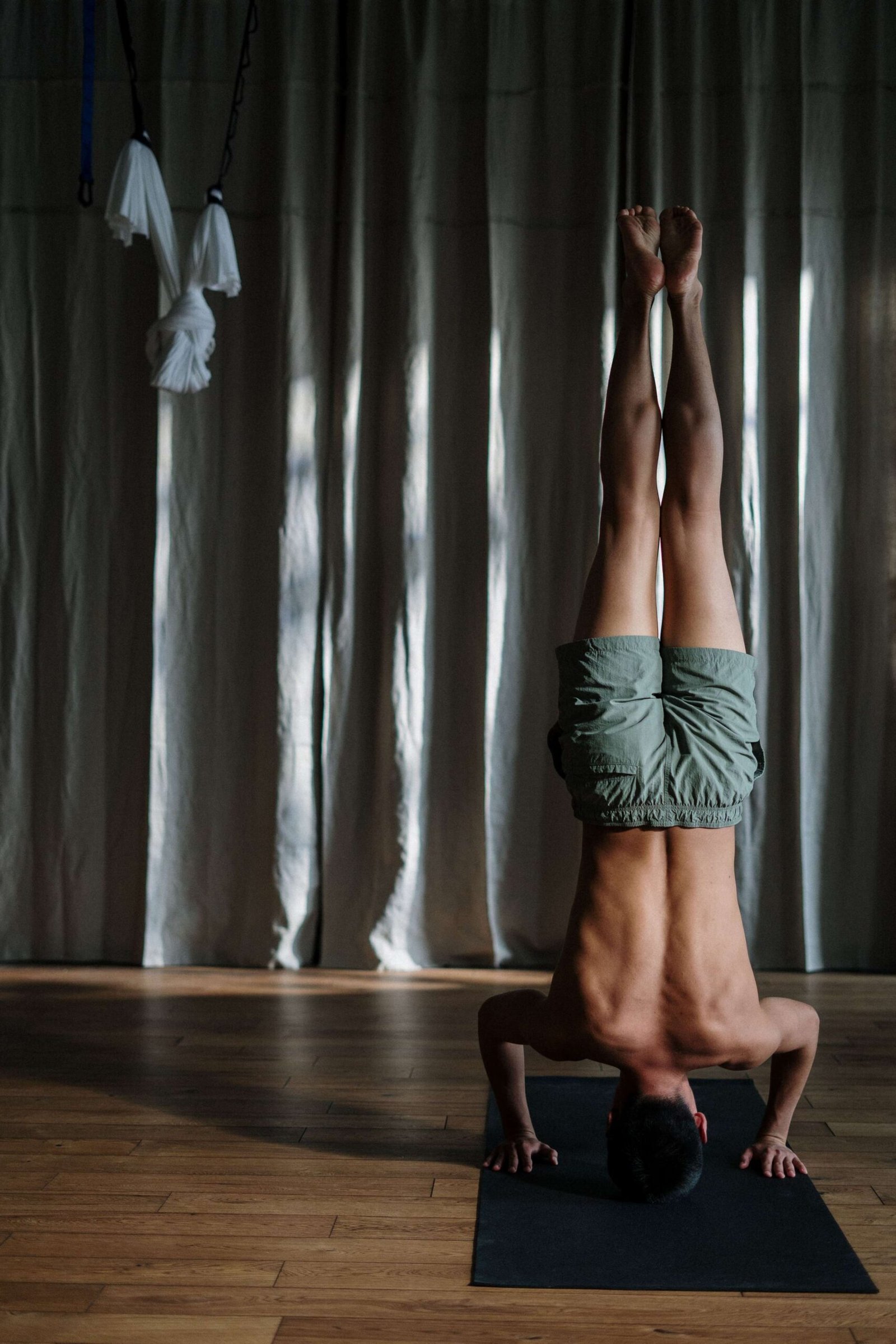
Strength training is not just about lifting barbells or heavy dumbbells. You can use your own body weight for resistance as well. This is where strength training yoga fits into your workout routine.
Yoga poses often make your legs, core, shoulders, and arms work to support your body against gravity. Moves like Planks, Warrior poses, Chair Pose, and Side Plank can be more challenging than you might think. Strength training yoga also blends strength with balance, mobility, breathing, and body awareness.
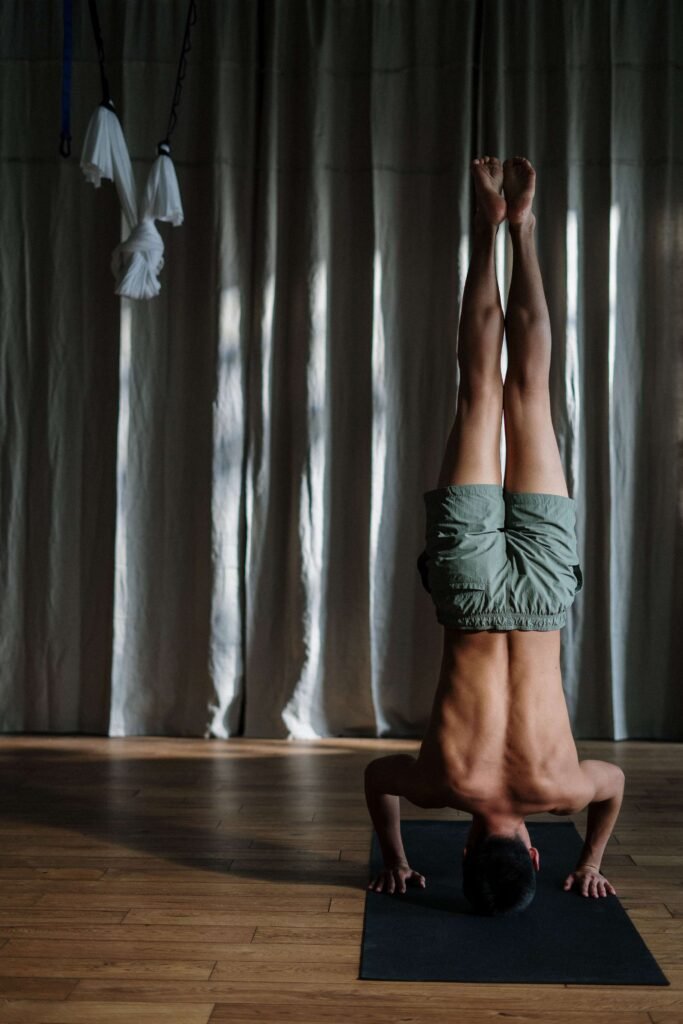
Is Yoga Considered Strength Training?
Some types of yoga can help build muscle strength. Whether yoga counts as strength training depends on the specific poses and activities you do in each session.
A gentle restorative yoga class usually focuses on relaxation and mobility. In contrast, a strength training yoga session with Planks, lunges, Chaturanga, and long Warrior holds puts much more demand on your muscles.
The Physical Activity Guidelines for Americans recommend that adults perform muscle-strengthening activities involving all major muscle groups on at least two days per week.
Yoga can help you meet this goal if the poses are challenging enough for your muscles.
Can Yoga Actually Build Muscle and Strength?
Muscles get stronger when you challenge them regularly and give them time to recover. In strength training yoga, most of the resistance comes from your own body weight and gravity.
You can make poses harder by holding them longer, doing more repetitions, moving more slowly, using just one arm or leg, or trying more advanced versions.
Research also suggests that yoga can improve certain aspects of physical fitness. A systematic review published in the International Journal of Behavioral Nutrition and Physical Activity found evidence that yoga may improve muscular strength, balance, flexibility, and mobility in adults aged 60 and older, although study methods and yoga programs varied. (PubMed)
If your goal is to build maximum muscle size or strength, traditional resistance training has a key benefit. You can gradually add more weight in small, measurable steps.
Benefits of Strength Training Yoga
Builds Functional Strength
Strength training yoga often gets several muscles working at the same time. For example, a Plank uses your shoulders, arms, chest, core, hips, and legs.
These poses help you control your body weight instead of just working one muscle at a time.
Improves Balance
Warrior III, Tree Pose, and other single-leg poses test your balance as your body shifts position.
The National Center for Complementary and Integrative Health (NCCIH) notes that research suggests yoga may benefit balance as well as general wellness.
Supports Flexibility and Mobility
Unlike many traditional strength exercises, yoga often mixes muscle work with moving through a wide range of positions.
This makes strength training yoga a good choice for people who want to build strength and flexibility at the same time.
Builds Muscular Endurance
Holding Chair Pose for 30 seconds feels very different from performing one heavy squat. Your muscles must continue producing force while you maintain the position.
Longer holds and controlled repetitions can therefore challenge muscular endurance.
Supports Mental Well-Being
Yoga also focuses on breathing, paying attention, and moving mindfully.
According to NCCIH, studies suggest yoga may help with stress management, mental and emotional health, sleep, and healthy habits. However, yoga should complement rather than replace appropriate mental-health treatment when someone needs professional support.
10 Best Strength Training Yoga Poses
You do not need complicated movements to create an effective strength training yoga routine. Start with poses you can control and progress gradually.
1. Chair Pose
Targets: quads, glutes, and core.
Stand tall, bend your knees, and push your hips backward as though sitting in a chair. Keep your chest lifted and hold for 20–30 seconds.
Make it harder over time by holding the pose longer.
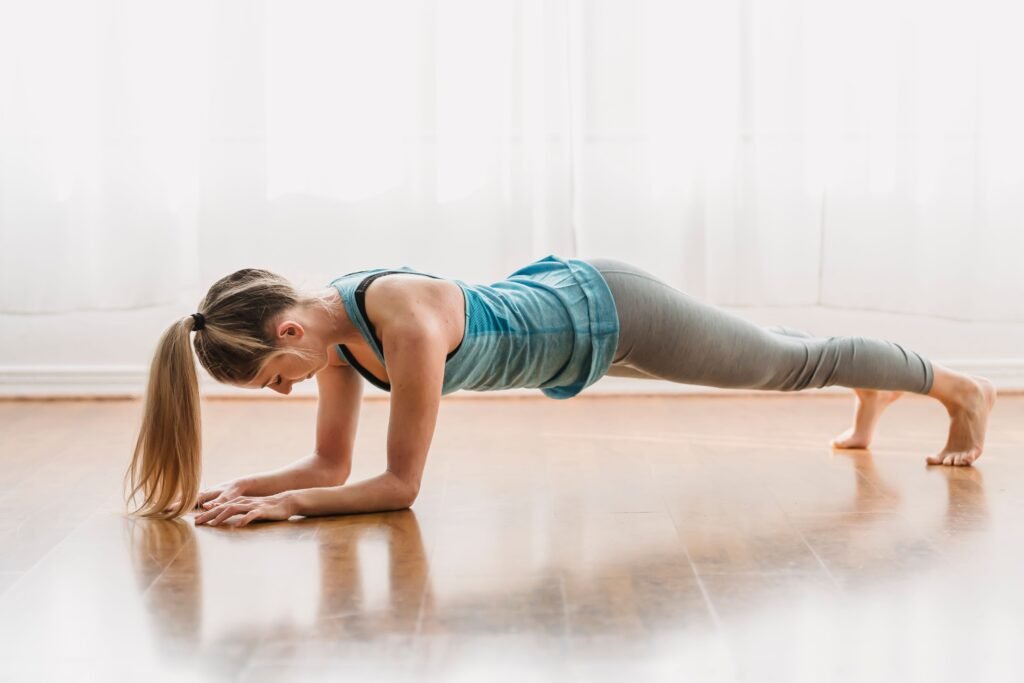
2. Plank Pose
Targets: core, shoulders, chest, and arms.
Place your hands underneath your shoulders and extend your legs behind you. Keep your body in a relatively straight line while actively pressing away from the floor.
Avoid allowing your lower back to sag.
3. Chaturanga
Targets: triceps, chest, shoulders, and core.
From Plank, bend your elbows and lower your body with control. Chaturanga requires considerable upper-body strength, so beginners can lower their knees to the floor.
Do not force yourself lower if you cannot maintain good shoulder control.
4. Warrior II
Targets: quads, glutes, hips, and core.
Step your feet apart, turn the front foot outward, and bend the front knee. Extend your arms in opposite directions and keep your torso upright.
Try holding each side for 20–40 seconds.
5. Warrior III
Targets: glutes, hamstrings, core, and stabilizing muscles.
Balance on one leg while extending the other behind you and leaning your torso forward.
Use a wall or chair for support while learning the movement.
6. Boat Pose
Targets: core and hip flexors.
Sit down, lean backward slightly, and lift your feet. Keep your knees bent if straightening your legs makes you lose control.
Boat Pose can be a tough core exercise in strength training yoga.
7. Side Plank
Targets: obliques, shoulders, arms, and hips.
Support your body with one hand and the side of one foot while stacking your hips.
If you are a beginner, you can keep your lower knee on the floor. Work up to the full pose over time.
8. Dolphin Pose
Targets: shoulders, upper back, and core.
Place your forearms on the floor and lift your hips upward, similar to Downward-Facing Dog.
Push through your forearms and keep your shoulders steady so you do not sink toward the floor.
9. Crescent Lunge
Targets: quads, glutes, calves, and core.
Step one foot forward and bend the front knee while keeping your back leg active.
Keep your torso upright and slowly hold the pose longer as your legs get stronger.
10. Bridge Pose
Targets: glutes, hamstrings, and back.
Lie on your back with your knees bent and feet on the floor. Press through your feet and lift your hips with control.
Lower your hips slowly instead of letting them drop to the floor.
How to Make Yoga More Effective for Strength
If you want to get stronger, making progress is important.
Suppose you can comfortably hold a Plank for 20 seconds. During the following weeks, you could gradually progress toward 30 and then 40 seconds. Eventually, you could introduce Side Plank or another more demanding variation.
You can make strength training yoga harder by doing more reps, moving more slowly, trying tougher versions, moving through a bigger range, or using one side of your body at a time.
The important point is to give your muscles a reason to adapt without sacrificing good technique.
15-Minute Strength Training Yoga Routine
A simple strength training yoga workout might look like this:
- Chair Pose — 30 seconds
- Plank — 30 seconds
- Chaturanga — 5 controlled repetitions
- Warrior II — 30 seconds per side
- Warrior III — 20 seconds per side
- Boat Pose — 30 seconds.
- Side Plank — 20 seconds per side
- Bridge — 10–15 repetitions
Rest for about 20–30 seconds whenever you need it. Complete two rounds if your fitness level allows.
Beginners can shorten the holds, take longer rests, and use easier modifications. Good form matters more than completing every exercise.
Yoga vs. Weight Training: Which Builds More Strength?
Strength training in yoga and weight training overlap, but they are not identical.
Yoga mainly uses body weight, leverage, gravity, and isometric holds to create resistance. It also naturally incorporates balance, mobility, coordination, and flexibility.
Weight training makes progressive overload easier. If a 10-kilogram dumbbell becomes easy, for example, you can eventually use a heavier one. This precise progression makes traditional resistance training particularly useful for maximizing strength and muscle growth.
You do not have to choose between them. Combining yoga and resistance training can provide a more varied exercise program.
How to Combine Yoga and Strength Training
If lifting weights is your main priority, you could strength train on Monday and Thursday and practice strength training yoga or lighter yoga on Tuesday and Friday.
You can also practice yoga after lifting. Keep it relatively light if your muscles are already tired from a demanding workout.
Another option is using gentle yoga on recovery days to work on mobility and relaxation rather than turning every session into another hard workout.
Your total exercise volume and recovery matter more than following one perfect weekly schedule.
How Often Should You Do Strength Training Yoga?
Beginners can start with two or three sessions per week. This schedule provides opportunities to practice while leaving time for recovery.
Remember that the U.S. physical activity guidelines recommend muscle-strengthening exercise on two or more days each week, along with aerobic physical activity. (HHS)
A challenging strength training yoga practice may contribute toward those muscle-strengthening sessions when it sufficiently works the major muscle groups.
Common Strength Training Yoga Mistakes
Trying the hardest pose immediately is not the fastest way to become stronger. Start with movements you can perform with control and progress from there.
Other common mistakes include holding your breath, sacrificing technique for longer holds, training through sharp pain, doing the same demanding movements every day, and assuming flexibility equals strength.
You also do not need to compete with someone else’s range of motion. Your strength training yoga practice should reflect your current ability.
Who Should Be Careful With Strength-Focused Yoga?
The NCCIH reports that yoga is generally considered safe for healthy people when performed properly under the guidance of a qualified instructor, but injuries can occur.
People with recent injuries, severe joint problems, balance difficulties, certain medical conditions, recent surgery, or pregnancy may need modifications.
Stop if a movement causes sharp, sudden, or worsening pain. If a health condition makes you unsure whether exercise is appropriate, speak with a healthcare professional before starting.
Frequently Asked Questions
Is yoga enough for strength training?
It can be for some fitness goals, especially when you are a beginner and use challenging bodyweight poses. However, people aiming to maximize muscle size or maximal strength may benefit from progressive resistance training with external weights.
Can strength training yoga build muscle?
Strength training yoga can challenge muscles and may help build strength and some muscle, particularly in beginners. Progress depends on providing enough resistance and gradually increasing the challenge.
Which type of yoga builds the most strength?
Power yoga and physically demanding Vinyasa-style practices generally place greater muscular demands on the body than gentle or restorative yoga. The actual poses and intensity matter more than the class name alone.
Does yoga count as resistance training?
Some yoga movements use body weight as resistance. Planks, Chaturanga, Chair, lunges, and similar poses can challenge major muscle groups.
Should I do yoga before or after weight training?
If lifting performance is your main goal, avoid exhausting your muscles with demanding yoga immediately beforehand. Gentle mobility may work before lifting, while a longer yoga practice can happen afterward or during a separate session.
Can I do yoga and weight training on the same day?
Yes. Many people combine them successfully. Adjust the intensity according to your fitness level, goals, and ability to recover.
Final Thoughts
Strength training yoga shows that building strength does not always require gym equipment. Planks, Warriors, Chair Pose, Boat Pose, and other bodyweight movements can challenge your muscles while also working on balance, mobility, and body control.
At the same time, yoga does not need to replace traditional resistance exercise. Combining strength training yoga with progressive weight training can create a balanced routine that develops strength while keeping movement varied and enjoyable.
Helpful YouTube Resource
Here’s a helpful video:
References
- U.S. Department of Health and Human Services — Physical Activity Guidelines for Americans
The guidelines recommend muscle-strengthening activities involving all major muscle groups on two or more days each week.
Physical Activity Guidelines - National Center for Complementary and Integrative Health — Yoga: What You Need to Know
An NIH resource covering research into yoga, potential health benefits, and safety considerations.
NCCIH Yoga Guide - Sivaramakrishnan D, et al. — The Effects of Yoga Compared to Active and Inactive Controls on Physical Function and Health-Related Quality of Life in Older Adults
Systematic review examining yoga and outcomes including strength, balance, flexibility, and physical function.
PubMed Research Article - Centers for Disease Control and Prevention — Physical Activity Basics
Public-health guidance about aerobic and muscle-strengthening physical activity for adults.
CDC Physical Activity Guidance - U.S. Department of Veterans Affairs — Whole Health Yoga
Educational yoga and mindful-movement resources from the VA Whole Health program.
VA Whole Health Yoga Resources